
The Question Every Homeowner Asks First
If you're considering a kitchen remodel in San Diego, the first question on your mind probably isn't about countertop materials or cabinet finishes. It's this: How long is this going to take?
It's a fair question. Your kitchen is the most-used room in your home, and living without it for weeks — or months — can feel daunting. The good news is that when you understand the process and work with a contractor who communicates clearly, the timeline becomes a lot less stressful.
At Mountain Crest Construction, we walk every homeowner through the schedule before we swing a single hammer. Here's a realistic look at what a typical San Diego kitchen remodel looks like, week by week.
Before the Clock Starts: The Planning Phase
Before any physical work begins, there's a critical planning stage that most people underestimate. This phase usually takes 4 to 8 weeks and includes:
- Design and layout decisions — Finalizing your floor plan, choosing materials, selecting appliances, and locking in finishes.
- Permits — Depending on the scope of your project, you may need building permits from the City of San Diego. Electrical, plumbing, and structural changes almost always require them.
- Material ordering — Custom cabinets can take 4 to 6 weeks to arrive. Specialty tile, countertops, and certain appliances may have similar lead times.
This is the phase where patience pays off. Rushing through planning leads to change orders, delays, and budget overruns once construction is underway. We encourage our clients to take the time to get every detail right before demolition day.
Week 1: Demolition and Discovery
This is the exciting — and admittedly loud — part. During the first week, the existing kitchen is carefully torn out. Cabinets, countertops, flooring, backsplash, and sometimes walls come down.
It's also the week where surprises can appear. Older San Diego homes, especially those in neighborhoods like La Jolla, Coronado, or El Cajon, may have outdated wiring, corroded plumbing, or even hidden water damage behind walls. A good contractor plans for this possibility and communicates any findings to you immediately.
By the end of week one, you'll have a blank canvas and a clear picture of any additional work that needs to happen.
Weeks 2–3: Rough-In Work
This is the behind-the-scenes stage that doesn't look glamorous but makes everything else possible. During rough-in, tradespeople handle:
- Electrical work — Adding circuits for new appliances, relocating outlets, installing under-cabinet lighting wiring.
- Plumbing — Moving or adding water lines and drain connections for sinks, dishwashers, or refrigerator water lines.
- HVAC adjustments — If walls have moved or the layout has changed, ductwork may need to be rerouted.
- Framing — Any structural changes, such as removing a wall to open up the kitchen to a living area, happen here.
At the end of rough-in, a city inspector will visit to verify that everything meets San Diego building codes. This inspection must pass before we can close up the walls.
Weeks 3–4: Drywall, Mudding, and Painting
Once inspections are approved, the walls get closed up with new drywall. This stage includes taping, mudding, sanding, and priming — a process that requires drying time between coats, so it can't be rushed.
Painting typically happens now as well, before cabinets and flooring go in. It's much easier to paint an empty room than to tape off brand-new cabinetry. We coordinate paint colors with your chosen finishes to make sure everything works together beautifully.
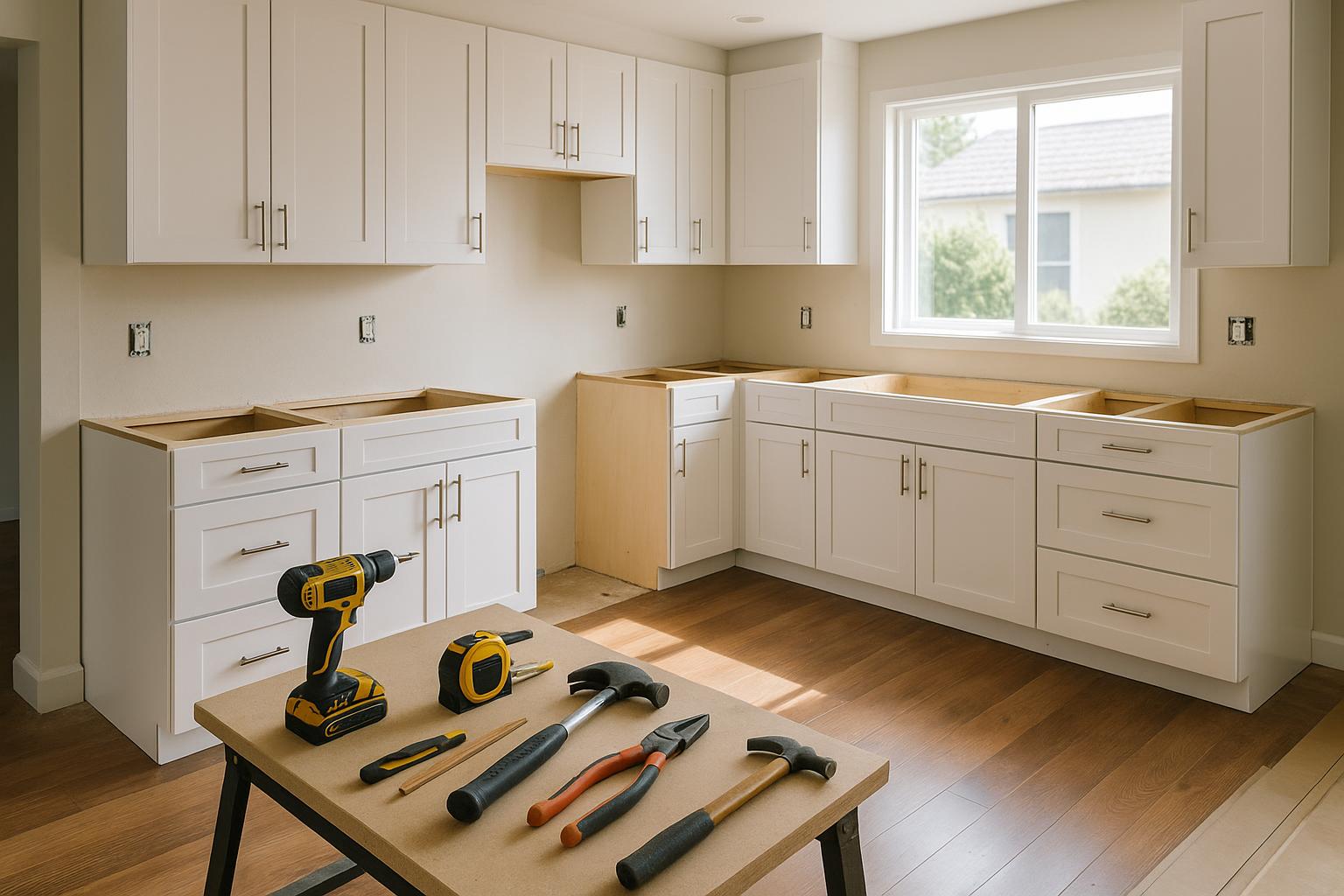
Weeks 5–6: Cabinets and Major Installations
This is when the kitchen starts to look like a kitchen again. Cabinet installation is one of the most detail-oriented parts of the entire project. Every box needs to be perfectly level and plumb, because even small errors become obvious once countertops and doors are installed.
During this phase, you'll also see:
- Cabinet hardware installation
- Appliance rough placement to confirm fit
- Countertop templating — a fabricator visits to laser-measure your new cabinets so the countertops are cut to exact specifications
Countertop fabrication usually takes 1 to 2 weeks after templating, which is built into the schedule.
Weeks 7–8: Countertops, Backsplash, and Finishing Touches
Now comes the part that makes homeowners smile. Countertops are installed, and suddenly the room has a finished feel. Following that:
- Backsplash tile goes up, adding personality and protecting your walls.
- Flooring is installed if it wasn't done earlier in the process.
- Plumbing fixtures — sinks, faucets, garbage disposals — are connected.
- Appliances are set in place and hooked up.
- Electrical trim — outlets, switches, and light fixtures get their cover plates and final connections.
A final inspection from the city confirms that all permitted work meets code, and then we do our own detailed quality walkthrough with you.
Why Timelines Vary
The 8-week timeline above represents a mid-range kitchen remodel — think new cabinets, countertops, flooring, appliances, and updated lighting in a standard-sized kitchen. Your project may be shorter or longer depending on several factors:
- Scope of work — A cosmetic refresh with new cabinet doors and countertops might take 3 to 4 weeks. A full gut renovation with structural changes could take 10 to 12 weeks.
- Material lead times — Custom or imported materials can add weeks to the schedule.
- Permit processing — San Diego permit timelines vary by season and project complexity.
- Home age and condition — Older homes in Chula Vista or National City may require additional remediation work that adds time.
Tips for Surviving Your Kitchen Remodel
Living through a kitchen renovation is manageable with a little preparation. Here's what we tell our clients:
- Set up a temporary kitchen — A folding table, microwave, toaster oven, and electric kettle in another room will keep you fed without relying on takeout every night.
- Protect the rest of your home — We use dust barriers and floor protection, but it helps to keep bedroom and bathroom doors closed during demolition.
- Make decisions early — The number one cause of delays is waiting on homeowner selections. Choose your tile, hardware, fixtures, and paint colors before construction begins.
- Communicate openly — If something doesn't look right or you have a question, bring it up immediately. Small issues are easy to fix early. They become expensive later.
A Remodel You Can Actually Enjoy
A kitchen remodel doesn't have to be a mystery. When you know what's happening and why, each week feels like progress instead of chaos. That's exactly how we approach every project at Mountain Crest Construction — with a clear plan, honest timelines, and consistent communication from start to finish.
If you're thinking about remodeling your kitchen in San Diego, we'd love to walk you through what your specific project would look like. Reach out to us for a free consultation, and let's build the kitchen you've been imagining.